
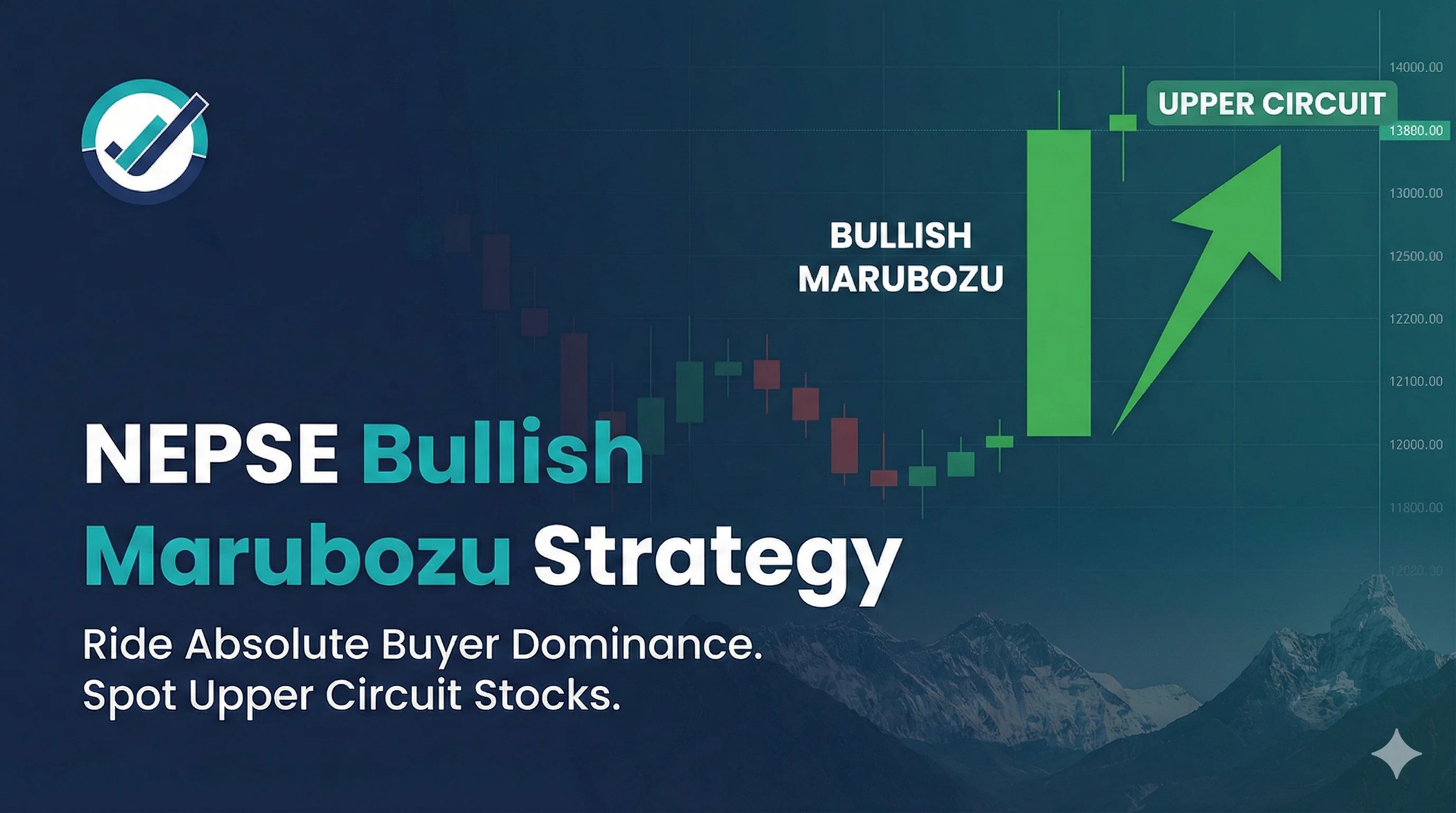
The Bullish Marubozu in NEPSE: Trading Absolute Buyer Dominance
In the Nepali share market, there are days when the bulls and bears fight a bitter tug-of-war, leaving behind long wicks and small candlestick bodies. But then, there are days when the bears don't even show up to the battlefield.
When buyers take absolute control of a stock from the opening bell at 11:00 AM straight through to the closing bell at 3:00 PM, the chart prints one of the most aggressive technical signals in existence: The Bullish Marubozu.
Derived from the Japanese word for "bald" or "shaved head" (because it lacks wicks/shadows), this candlestick pattern is the ultimate indicator of momentum. Here is everything a laganikarta needs to know to spot, confirm, and trade the Bullish Marubozu in the NEPSE.
What is a Bullish Marubozu Candlestick?
Unlike the Hammer or the Dragonfly Doji, which rely on long shadows to tell the story of a price rejection, the Marubozu tells a story through its sheer size and solid body.
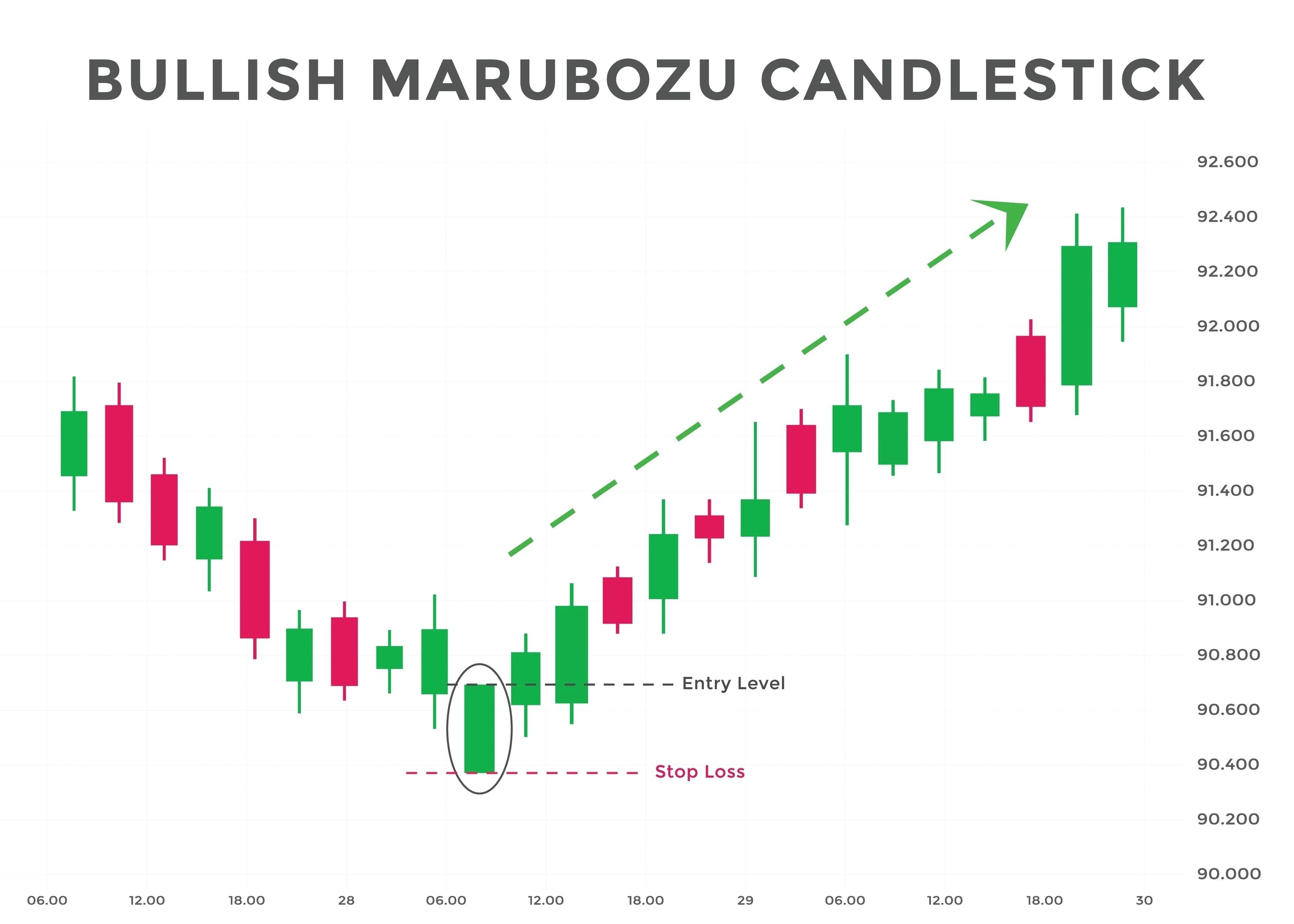 The Anatomy of a Perfect Bullish Marubozu:
The Body: A very long, solid green (bullish) body. It should be noticeably larger than the candlesticks from the previous few trading days.
No Lower Wick: The opening price is the absolute lowest price of the day. Buyers started accumulating kitta the second the market opened and never let the price drop below that initial level.
No Upper Wick: The closing price is the absolute highest price of the day. There was no end-of-day profit booking; buyers were willing to pay the absolute maximum right up until the TMS closed.
(Note: In the real-world NEPSE, a "perfect" Marubozu is rare. A candlestick with extremely tiny, microscopic wicks is still perfectly valid as a Marubozu).
The Psychology: Why Does It Happen in NEPSE?
A Bullish Marubozu doesn't just happen randomly. It is almost always driven by extreme conviction, institutional buying, or major fundamental catalysts.
In the NEPSE context, you will typically see a Bullish Marubozu form under these conditions:
Dividend Announcements: A commercial bank or microfinance company announces a bonus dividend that exceeds market expectations.
Right Share Approvals: A hydropower company gets approval from the Electricity Regulatory Commission (ERC) to issue 1:1 right shares, triggering massive FOMO (Fear Of Missing Out).
Macroeconomic Shifts: Nepal Rastra Bank (NRB) announces a favorable monetary policy, lowering interest rates and injecting liquidity into the banking system, causing a massive market-wide rally.
When you see a Bullish Marubozu, it means the kheladis and retail investors are in total agreement: the stock is going up, and everyone wants in before the stock hits the 10% positive circuit breaker.
How to Trade the Bullish Marubozu in NEPSE
While a Marubozu is a very strong signal, you cannot trade it blindly. Depending on where it appears on the chart, it dictates a completely different trading strategy.
Scenario 1: The Breakout (Continuation Signal) If a stock has been moving sideways in a tight range (consolidation) and suddenly prints a Bullish Marubozu that breaks above the resistance line, this is a breakout.
Action: This is a high-probability buy signal. It indicates the stock is starting a fresh bull run. You can enter near the close of the candle or on the open of the next day.
Scenario 2: The Reversal (Bottom Fishing) If a stock has been in a brutal downtrend for weeks and suddenly forms a Bullish Marubozu at a known support zone, this is a reversal.
Action: The smart money has stepped in to stop the bleeding. Wait for the next day to confirm that the momentum is continuing before buying in, just to be safe from a "dead cat bounce."
Scenario 3: The Exhaustion (Trap Warning) If a stock has already been skyrocketing for several days and suddenly prints a massive Bullish Marubozu at the very top of the rally, be careful! This is often an "exhaustion candle." It means the last wave of late retail buyers has entered, and the smart money is about to start dumping their shares to book profits.
Execution & Risk Management
Volume is Mandatory: A Marubozu on low volume is extremely suspicious and should be ignored. You want to see high turnover confirming the heavy buying pressure.
Stop-Loss: If you take an entry based on a Bullish Marubozu, place your strict stop-loss just below the open price (the bottom of the green body). If the bears manage to push the price below that level in the coming days, the bullish thesis is completely destroyed.
Congratulations! You have officially mastered the Single-Candle reversal patterns. But what happens when you combine two days of price action to find even stronger, fully confirmed trend reversals? 👉 Click here to start our next series: Two-Candle Bullish Patterns (Starting with the Bullish Engulfing)