
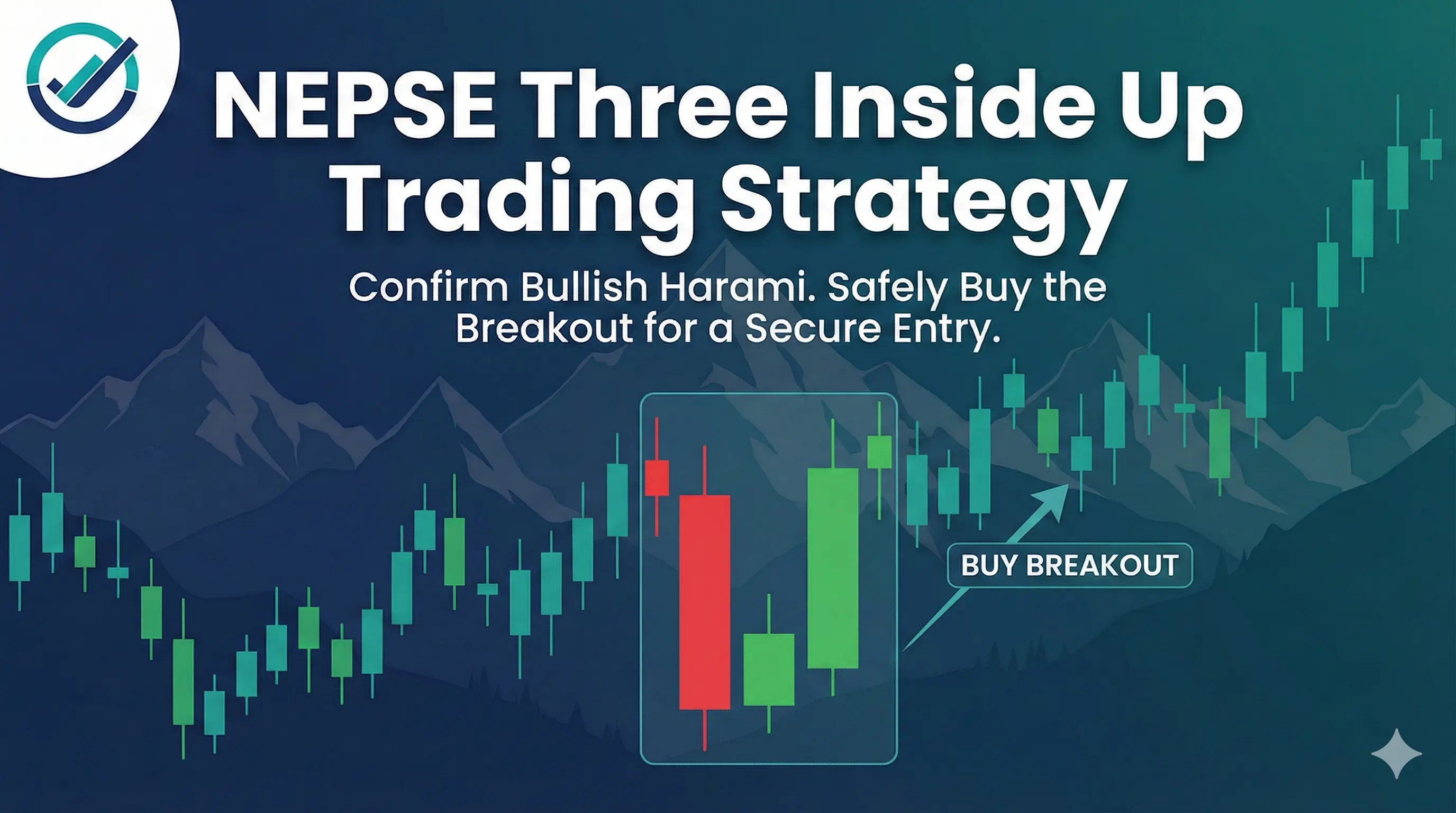
If you have been studying technical analysis for the Nepali share market, you know that entering a trade too early can trap you in a "dead cat bounce," while entering too late means missing out on the best Risk-to-Reward ratio.
How do you find the perfect balance? You wait for the market to confirm its own reversal.
The Three Inside Up candlestick pattern is the perfect solution for cautious laganikartas. It takes the early warning signal of a Bullish Harami and adds a concrete, undeniable breakout day to prove that the bears have lost and the bulls are firmly in control. Here is how to trade this highly reliable, three-day setup in the NEPSE.
What is the Three Inside Up Pattern?
The Three Inside Up is a three-candle bullish reversal pattern that forms at the bottom of a downtrend. If you already know how to identify a Bullish Harami, you already know 66% of this pattern!
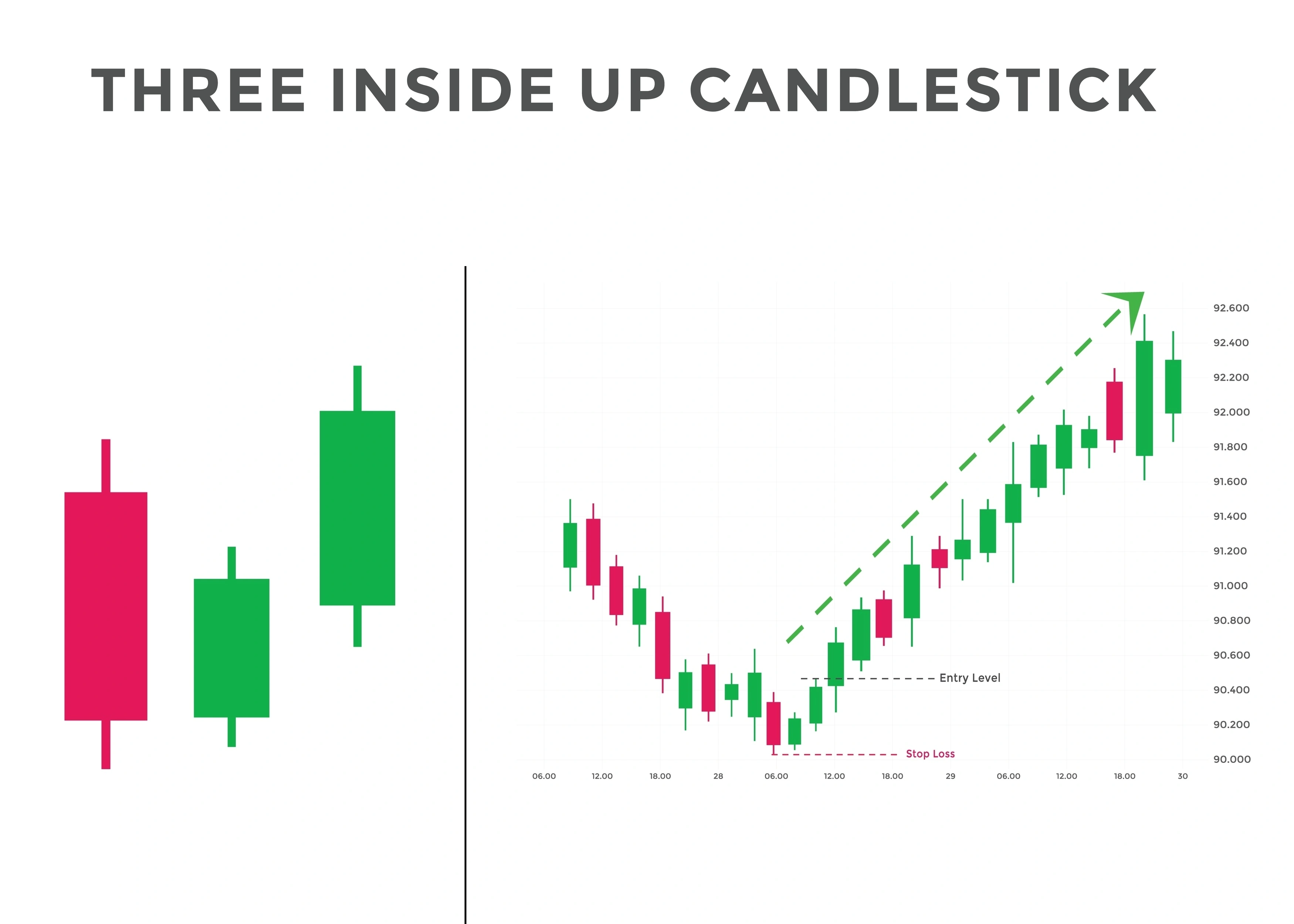 The Anatomy of a Perfect Three Inside Up:
Candle 1 (Day 1): A long, strong red candle. The market is dropping, and sellers are in charge.
Candle 2 (Day 2): A small green (or doji) candle that opens and closes entirely within the real body of the Day 1 red candle. This forms the standard Bullish Harami, signaling that selling pressure has paused.
Candle 3 (Day 3 - The Confirmation): A strong green candle that breaks upward and closes above the high of the Day 1 red candle. This is the critical step that transforms a simple "pause" into a confirmed "reversal."
The Psychology: Trapping the Late Sellers
In the secondary market, psychology is everything. Here is the story the Three Inside Up tells:
The Final Push (Day 1): Panic sellers are aggressively dumping shares. Everyone expects the stock to keep falling.
The Standoff (Day 2): The next day, the sellers try to push the price lower but fail. The price stays trapped inside yesterday's range. The kheladis are quietly absorbing the selling pressure, but the market is still undecided.
The Breakout (Day 3): Suddenly, aggressive buy orders hit the TMS. The price surges past the high of Day 1. Every retail trader who short-sold or panic-sold on Day 1 realizes they are on the wrong side of the trend. Their stop-losses are triggered, adding even more buying pressure to the upward rally.
How to Trade the Three Inside Up in NEPSE
Because the third candle is the confirmation, this pattern offers a very safe and structured entry for swing traders.
Step 1: Check the Location Ensure the pattern is forming at the bottom of a sustained downtrend. It is incredibly effective if the "inside" candle (Day 2) bounces off the lower band of the Bollinger Bands or a major psychological support level (like the NEPSE index bouncing off 2,000).
Step 2: Monitor the Volume Look at the trading turnover. You want to see the volume drop significantly on Day 2 (showing sellers have lost interest) and spike heavily on Day 3 (showing institutional buyers have arrived to push the breakout).
Step 3: Execution & Risk Management
Entry: You can confidently buy near the close of Day 3 when it is clear the candle will close above the Day 1 high. Alternatively, you can buy right at the market open on Day 4.
Stop-Loss: Place your strict stop-loss just below the lowest point of the entire three-day formation (usually the bottom of Day 1 or Day 2).