
How to spot early warning signs of a reversal and ride downtrends with confidence in the volatile NEPSE market.
Let’s be real about trading in Nepal. Our market, NEPSE, is exciting, but it can be incredibly unforgiving. We have seen massive bull runs, but we also know the pain of sharp, sudden corrections that wipe out weeks of gains in days.
In a market like ours—which is highly sentiment-driven and often volatile—you don't always have the luxury of waiting three days for a complex pattern to form. Sometimes, you need a signal today that tells you the tide might be turning tomorrow.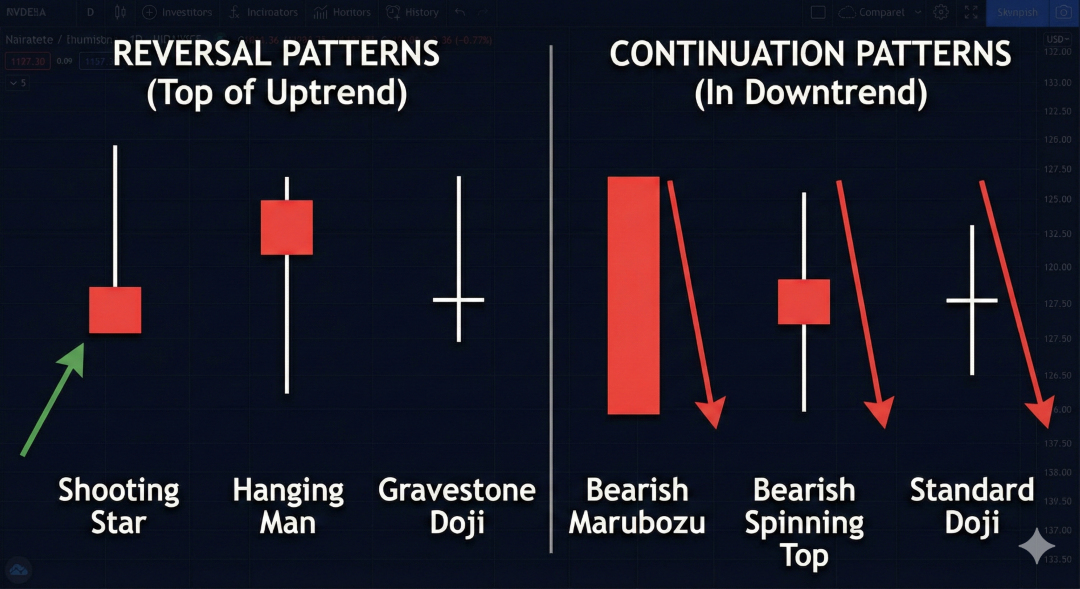 This is where Single Bearish Candlestick Patterns become your best weapon. They are the fastest technical signals available, offering immediate insight into who is winning the daily battle between buyers (bulls) and sellers (bears).
This guide will master the essential single-candle patterns that indicate prices are likely to fall, split into two crucial categories: Reversals (the top is in) and Continuations (the drop isn't over).
The Golden Rule Before We Begin
Context is King.
Before you sell everything because you saw one red candle, remember this rule: A single candlestick pattern by itself is not a guarantee.
A bearish reversal needs a prior uptrend to reverse.
A bearish continuation needs an existing downtrend to continue.
if you see these patterns sideways, choppy markets, they often mean nothing. Always look for confirmation the next day (e.g., a lower close).
The Reversal Patterns (Spotting the Top)
These candles appear after a strong upward move. They are early warning signals that the buyers are exhausted and sellers are taking control.
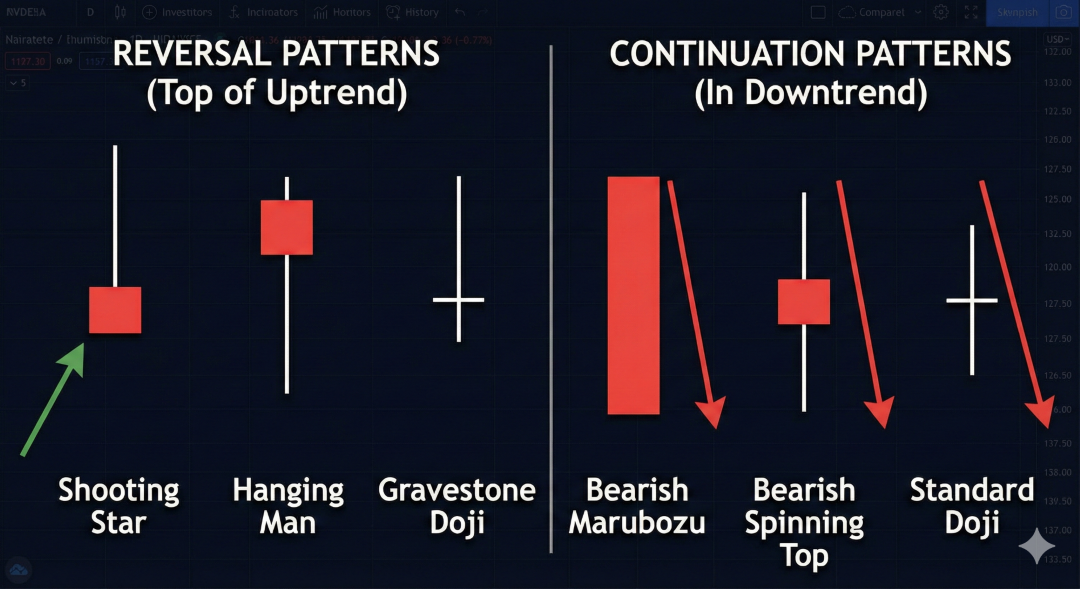
 1. The Shooting Star (The Trap)
This is the most common warning sign at the top of a rally.
What it looks like: A small body (red or green) at the bottom, with a very long upper shadow (at least twice the length of the body). Little to no lower shadow.
The Psychology: Buyers pushed the price up aggressively during the day to make a new high. But then, massive selling pressure stepped in and forced the price all the way back down to near where it started. The bulls got trapped at the high prices.
Read the deep dive : The NEPSE Trader’s Defense: Spotting the "Shooting Star" Before You Get Trapped at the Highs.
2. The Hanging Man (Nervous Buyers)
This looks exactly like a "Hammer" (a bullish signal), but because it appears at the top of an uptrend, it’s bearish.
What it looks like: A small body at the top, with a very long lower shadow.
The Psychology: Even though the price closed near the top, that long lower shadow is terrifying. It means that at some point during the day, huge selling occurred. The buyers managed to push it back up, but their confidence is shaken. They are now nervous holders.
Read the deep dive : The Hanging Man Candlestick: Why NEPSE Buyers Should Be Nervous.
3. The Gravestone Doji (Total Rejection)
This is a severe version of the Shooting Star.
What it looks like: An upside-down "T". The open, close, and low prices are almost identical, creating a flat line at the bottom with a long upper shadow.
The Psychology: The ultimate rejection. Bulls tried to rally, and bears crushed them completely back to the starting line.
Read the deep dive : The Gravestone Doji: The Ultimate Sign of Rejection in the NEPSE Market.
The Continuation Patterns (Riding the Downtrend)
These patterns occur when the market is already falling. They signal that the selling pressure is strong and the bottom is likely not in yet.
 1. The Bearish Marubozu (Pure Conviction)
In Japanese, Marubozu means "bald" or "shaved head."
What it looks like: A long, solid red body with absolutely no upper or lower shadows. It opened at the high of the day and closed at the very low.
The Psychology: Total domination by sellers from the opening bell to the closing bell. When you see this in the middle of a downtrend in NEPSE, it often means big players are exiting, and lower prices are coming.
Read the deep dive: The Bearish Marubozu: The NEPSE Signal That Screams "Don't Buy the Dip".
2. The Bearish Spinning Top (The Pause Before the Drop)
Spinning tops usually mean indecision, but in a downtrend, a red one is bearish.
What it looks like: A small red body in the middle, with upper and lower shadows of roughly equal length.
The Psychology: The market took a "breather." Buyers tried to step in slightly, sellers kept pushing, and it ended in a draw (but slightly in favor of bears). Often, this is just a pause before the next leg down.
Read the deep dive: The Bearish Spinning Top: Why This "Pause" in a NEPSE Downtrend is Usually a Trap.
The NEPSE Context: How to Apply This in Nepal
While the candles look the same globally, here is how a smart Nepalese trader interprets them differently:
1. Volume is the Real "Confirmation"
NEPSE is a relatively smaller market. Sometimes, prices can be manipulated on low volume.
If you see a Shooting Star at an all-time high, but the volume is incredibly low, be skeptical. It might just be a lack of buyers rather than aggressive sellers.
If you see a Bearish Marubozu accompanied by massive, above-average volume, pay attention. That is real selling pressure, likely from institutional investors or panic selling.
2. Respect "Big Number" Resistance
NEPSE traders are psychologically driven by round numbers (e.g., the 2500, 3000, or 3200 index levels).
A Hanging Man that appears exactly at a major psychological resistance level is far more potent than one that appears randomly in the middle of a chart.
3. Sentiment and Policy Overrides Technical
Remember that NEPSE is highly sensitive to NRB (Nepal Rastra Bank) policies and liquidity crises.
If bad news about liquidity hits the market, and you see a Bearish Continuation pattern, don't try to be a hero and buy the dip immediately. The technical are confirming the fundamental news—the trend is down.
Conclusion
Mastering single bearish candlesticks won't make you win every trade. But it will give you the speed to protect your capital when the market sentiment shifts. In the volatile waters of NEPSE, recognizing these early warning signs is often the difference between a small loss and being trapped at the top.
Keep practicing spotting them, wait for confirmation, and trade smartly.