
In the Nepal Stock Exchange (NEPSE), finding the actual "bottom" of a bear market is incredibly difficult. Many laganikartas see a stock bounce once and immediately jump in, only to watch the price crash even further. But sometimes, the market gives you an unmistakable signal that a concrete floor has been built.
When a stock tests the exact same price level three separate times and refuses to drop any lower, it forms a Triple Bottom. This is one of the most reliable and powerful bullish reversal patterns in technical analysis because it proves beyond a shadow of a doubt that the sellers have completely exhausted their supply.
Anatomy of the Triple Bottom
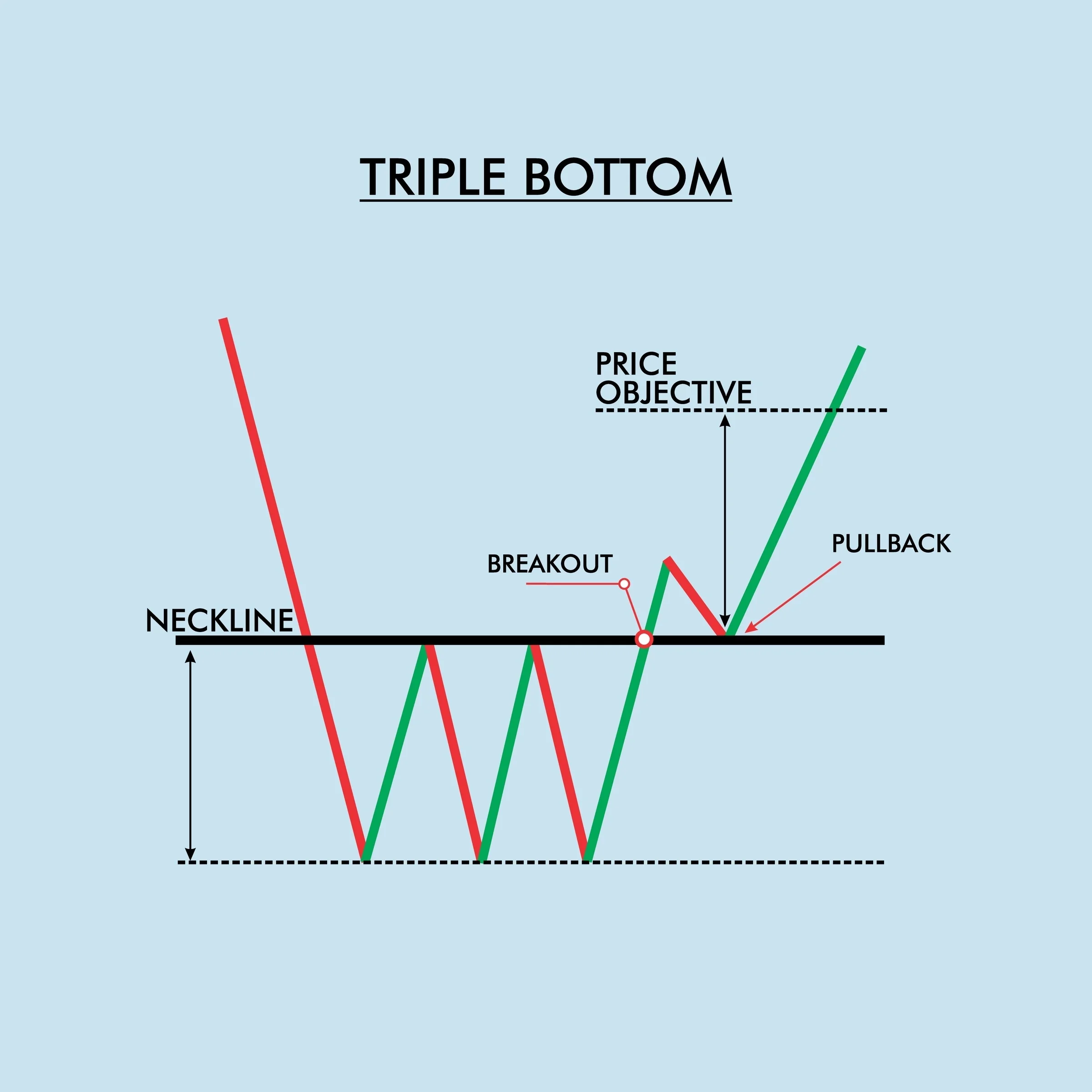
The Triple Bottom forms at the end of a long downtrend. It visually resembles the letter "W" but with an extra leg. Here is how it develops:
📉 The First Bottom: The stock crashes to a new low, hits a massive wall of buying pressure, and bounces up. This establishes the initial support line (the floor). The price then rallies to create a temporary high (the neckline resistance).
📉 The Second Bottom: Sellers step back in and push the price down again. However, it perfectly hits the exact same support line as the First Bottom and bounces back up to the neckline.
📉 The Third Bottom: The sellers try one final, desperate time to break the floor. The price hits the support line a third time.
🚀 The Breakout: The sellers are completely drained of shares. The buyers take overwhelming control, pushing the stock up past the neckline resistance to confirm a massive new bull market.
The Psychology: The Ultimate Shakeout
The Triple Bottom is a masterclass in market manipulation and retail panic.
When the price drops to test the support line for the third time, the psychology of the amateur retail investor completely breaks. They assume that because the stock keeps dropping, the floor is eventually going to collapse. In pure panic, they dump their shares at the exact bottom.
However, the "smart money" (institutional investors) are waiting right there at that support line. They know the floor is solid. They happily absorb all those deeply discounted, panic-sold shares. Because the smart money absorbs everything, the sellers fail to push the price lower for a third time. Once the sellers realize they are out of ammunition, the buying pressure explodes upward, leaving the panicked retail investors behind.
How to Trade It Safely in NEPSE
Because this pattern takes a long time to form, patience and discipline are your biggest advantages:
🚦 The Entry Signal: Never try to buy exactly at the third bottom—it is incredibly risky, as the support could still break. The pattern is only confirmed when a daily candlestick powerfully closes above the neckline resistance. That breakout is your true buy signal.
📊 The Volume Check: Pay close attention to NEPSE daily turnover. You should see volume steadily decreasing across the three bottoms (proving the sellers are running out of steam). The breakout above the neckline must be accompanied by a massive surge in volume.
🛡️ The Stop Loss: Once you buy the breakout, place your strict stop loss just below the massive three-point support floor. If that floor ever breaks, the bullish setup is invalidated.
🎯 The Target: Measure the vertical distance between the support floor and the neckline resistance. Add that exact distance to your breakout point to find your minimum profit target for the new rally.
🎯 Next Move for Laganikartas: Draw strong horizontal support lines on your NEPSE charts. If a scrip has tested a specific price three times without breaking, set a price alert at the neckline and get ready to buy the confirmed breakout! ➡️ Triple Bottom vs. Double Bottom: Which reversal pattern is more reliable in the Nepali market? Read our comparison here.