
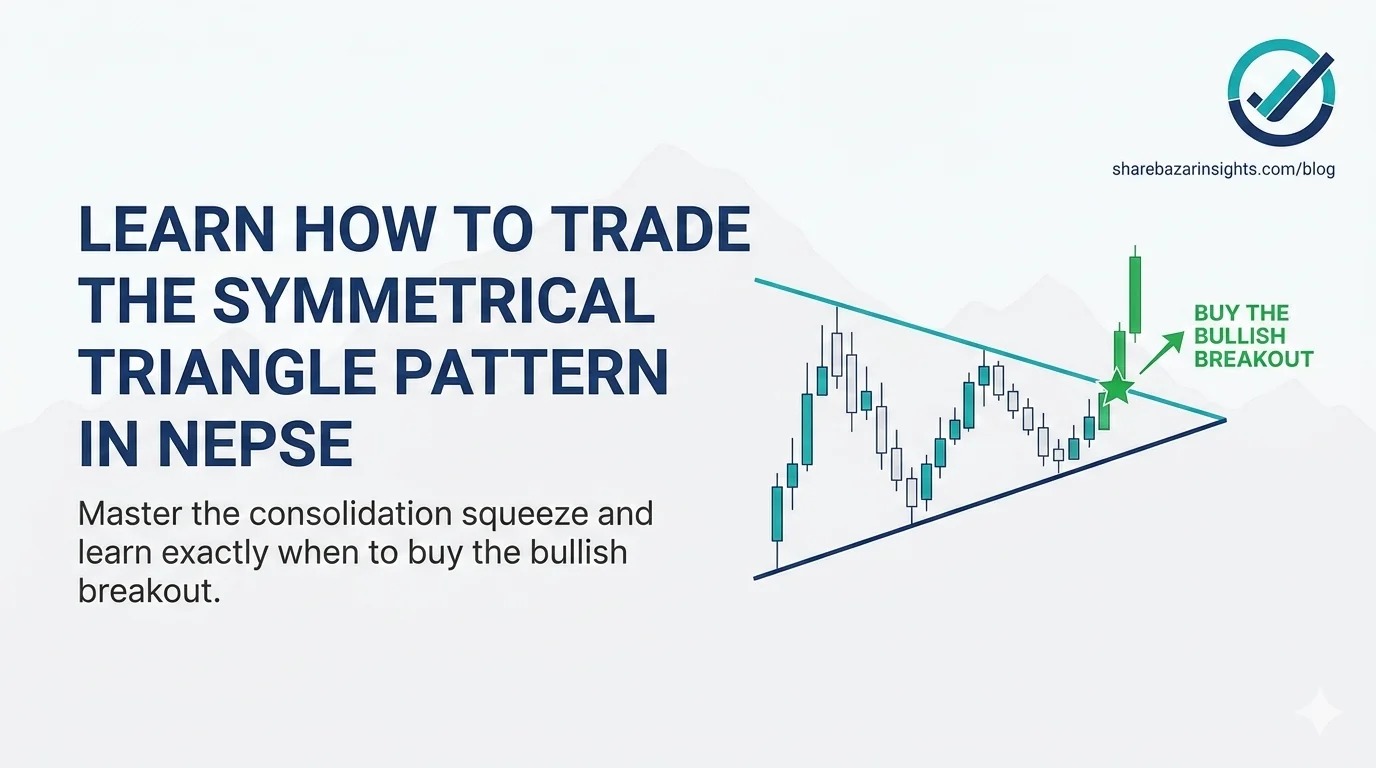
In the Nepal Stock Exchange (NEPSE), some of the biggest price movements happen right after periods of intense boredom. When a stock stops trending and instead starts squeezing into a tighter and tighter price range, it forms a Symmetrical Triangle.
This is a neutral (or bilateral) pattern. It means the market is completely undecided. A massive breakout is brewing, but it could happen in either direction. For a smart laganikarta, this pattern requires ultimate patience and a strict set of rules.
Anatomy of the Symmetrical Triangle
Unlike an Ascending or Descending triangle (which have one flat line), a Symmetrical Triangle has two angled lines that converge to a point:
📉 The Lower Highs (Resistance): Sellers are stepping in slightly earlier on every bounce, pushing the upper trendline downward.
📈 The Higher Lows (Support): Buyers are also stepping in slightly earlier on every dip, pushing the lower trendline upward.
🗜️ The Squeeze: The price gets trapped in the middle, swinging back and forth in a rapidly shrinking space.
🚀 The Breakout: The pressure becomes too much, and the price violently breaks out of the triangle—either up or down.
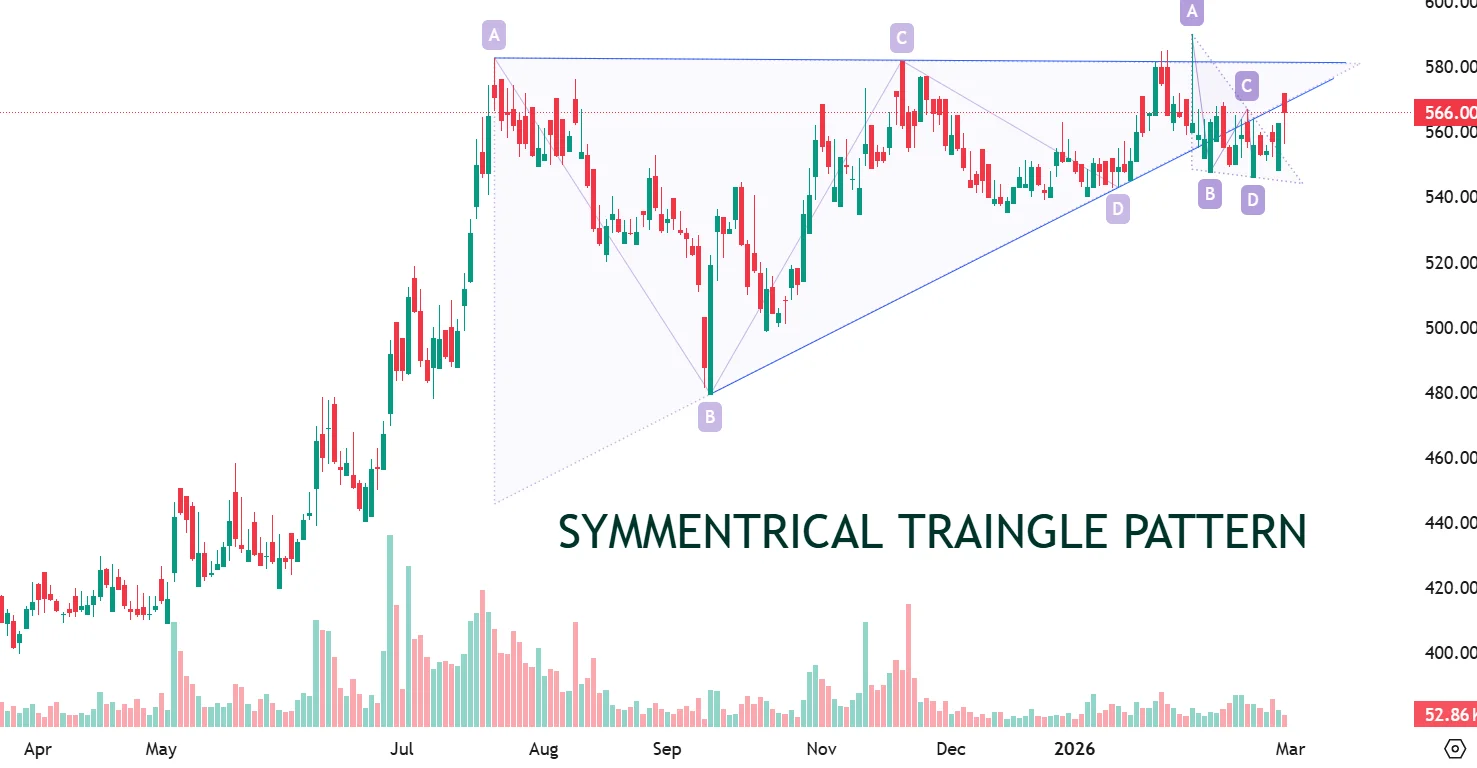 The Psychology: The Deadlock
Inside a Symmetrical Triangle, the bulls and the bears are evenly matched. Neither side has the capital to take full control of the trend.
As the lines get closer together, trading volume typically dries up. Many retail investors get bored and look for action elsewhere. However, institutional investors are watching closely. The tighter the spring is compressed, the more violent the release will be. When one side finally runs out of money, the other side takes total control, triggering a massive wave of momentum in the direction of the breakout.
How to Trade It in NEPSE
Because we cannot short-sell in Nepal, our strategy here is entirely reactive:
🚦 The Golden Rule: Never guess the direction. Wait patiently for a daily candlestick to close cleanly above the upper resistance line to signal a bullish buy. If it breaks below the lower support line, the setup is dead—do not buy.
📊 Volume is Mandatory: A bullish breakout must have a massive spike in daily turnover. If it breaks upward on low volume, it is likely a "fakeout" designed to trap eager buyers.
🛡️ The Stop Loss: If you buy the bullish breakout, place your stop loss safely below the lower rising support line of the triangle.
🎯 The Target: Measure the height of the thickest part of the triangle (the base). Add that distance to your breakout point to calculate your potential profit target.
🎯 Next Move for Laganikartas: Draw the converging lines on your chart and set a price alert near the upper trendline. Let the market make the first move, and only jump in when the bulls prove they have won.