
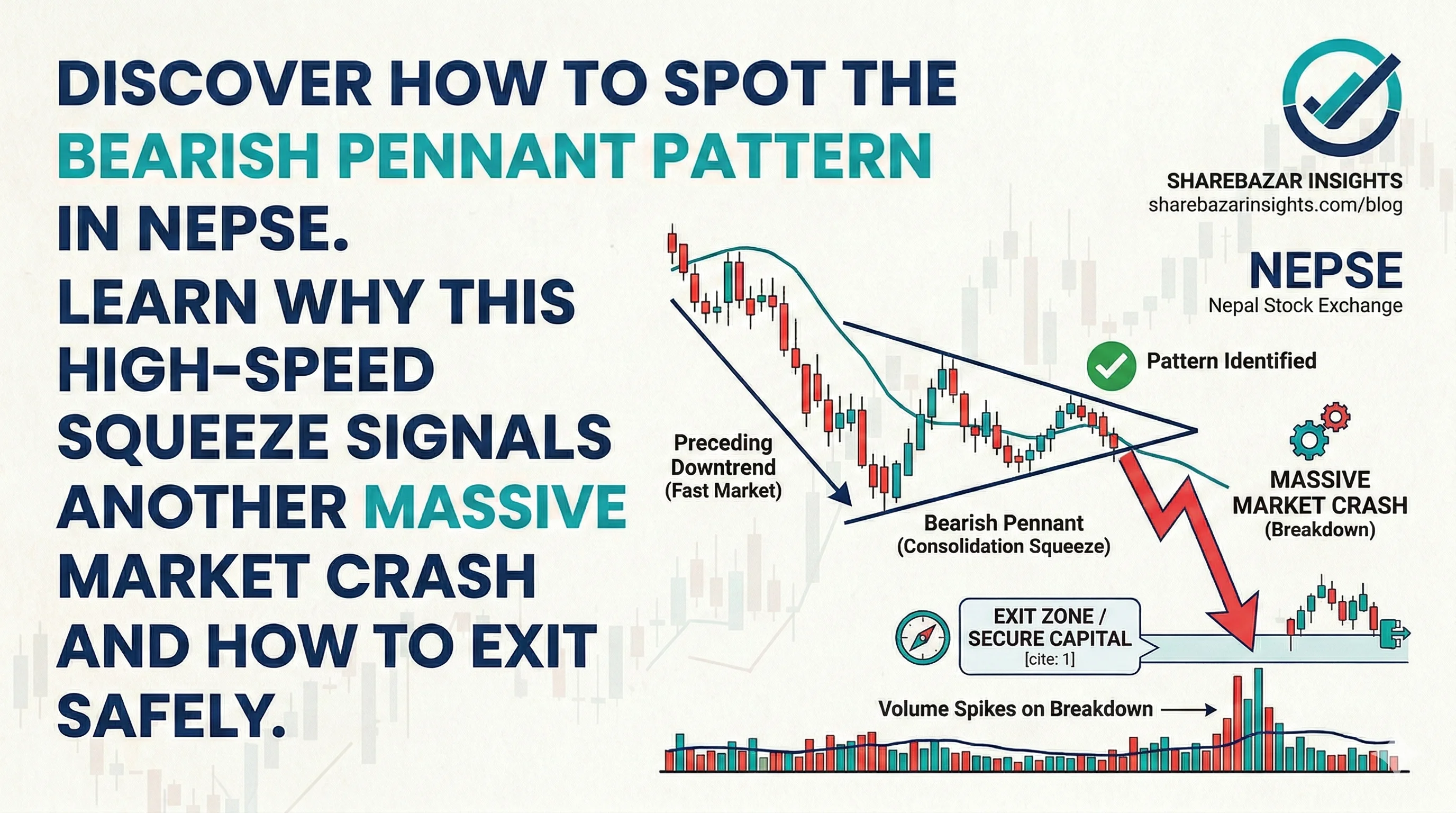
In the Nepal Stock Exchange (NEPSE), market crashes are rarely a straight line down. Often, the price will pause, creating a brief, violent battle between desperate buyers and aggressive sellers. When this battle squeezes the price into a rapid, tightening triangle, it forms a Bearish Pennant.
For a laganikarta, this pattern is a blaring siren. It warns that the brief pause in selling is almost over, and a secondary, equally devastating crash is about to hit.
Anatomy of the Bearish Pennant
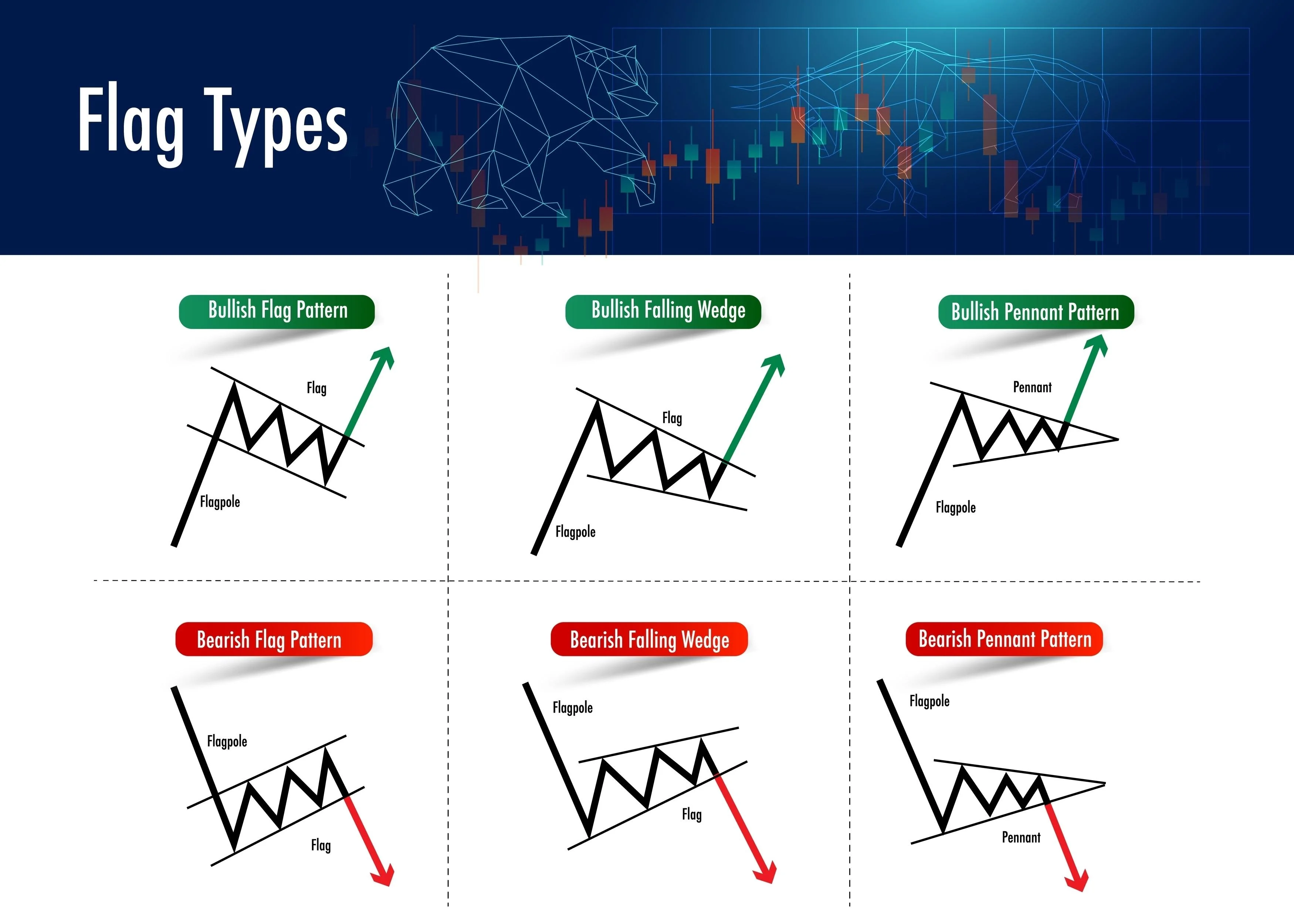
A Bearish Pennant is a short-term continuation pattern that typically forms over just a few days. It has three distinct phases:
📉 The Flagpole (The Crash): The stock suffers a massive, steep drop on high trading volume.
📐 The Pennant (The Panic Squeeze): Instead of drifting slowly upward (like a Bear Flag), the price immediately consolidates into a tiny symmetrical triangle. The highs get slightly lower, and the lows get slightly higher, squeezing together rapidly.
🚨 The Breakdown: The price forcefully breaks out of the bottom trendline of the triangle, continuing the steep downward trend.
 The Psychology: Desperation and Deadlock
The Bearish Pennant is driven by pure panic and deadlock.
After the initial flagpole crash, trapped retail investors are desperate. They refuse to sell at such a huge loss, so they stubbornly try to hold the line. Some might even try to "average down" by buying more shares, which creates the slightly higher lows of the triangle's bottom.
However, the sellers are highly aggressive. They use every tiny upward tick to aggressively dump their shares, creating the lower highs of the triangle's top.
This creates a massive squeeze. Because the trapped buyers are quickly running out of capital to defend the price, the deadlock doesn't last long. The moment the buyers' cash dries up, the sellers easily break the floor, and the stock plummets.
How to Trade It (Protect Your Capital) in NEPSE
Because this pattern happens fast, hesitation will cost you money:
🚦 The Warning: If a stock crashes and immediately starts trading in a tiny, choppy, tightening range, stay away. Do not attempt to buy this dip.
🛡️ The Exit Point: If you are holding the stock, a daily candle closing decisively below the lower rising trendline of the pennant is your final warning to cut your losses and exit.
🎯 The Danger Zone: Measure the initial flagpole's depth and subtract it from the breakdown point. Bearish Pennants usually cut the price down by the exact same distance as the first crash.
🎯 Next Move for Laganikartas: Keep your emotions in check. When a stock enters a panicked squeeze after a drop, it is better to watch from the sidelines with your cash safely in the bank. ➡️ Unsure when it is actually safe to buy after a crash? Read our guide on identifying true market bottoms here.