
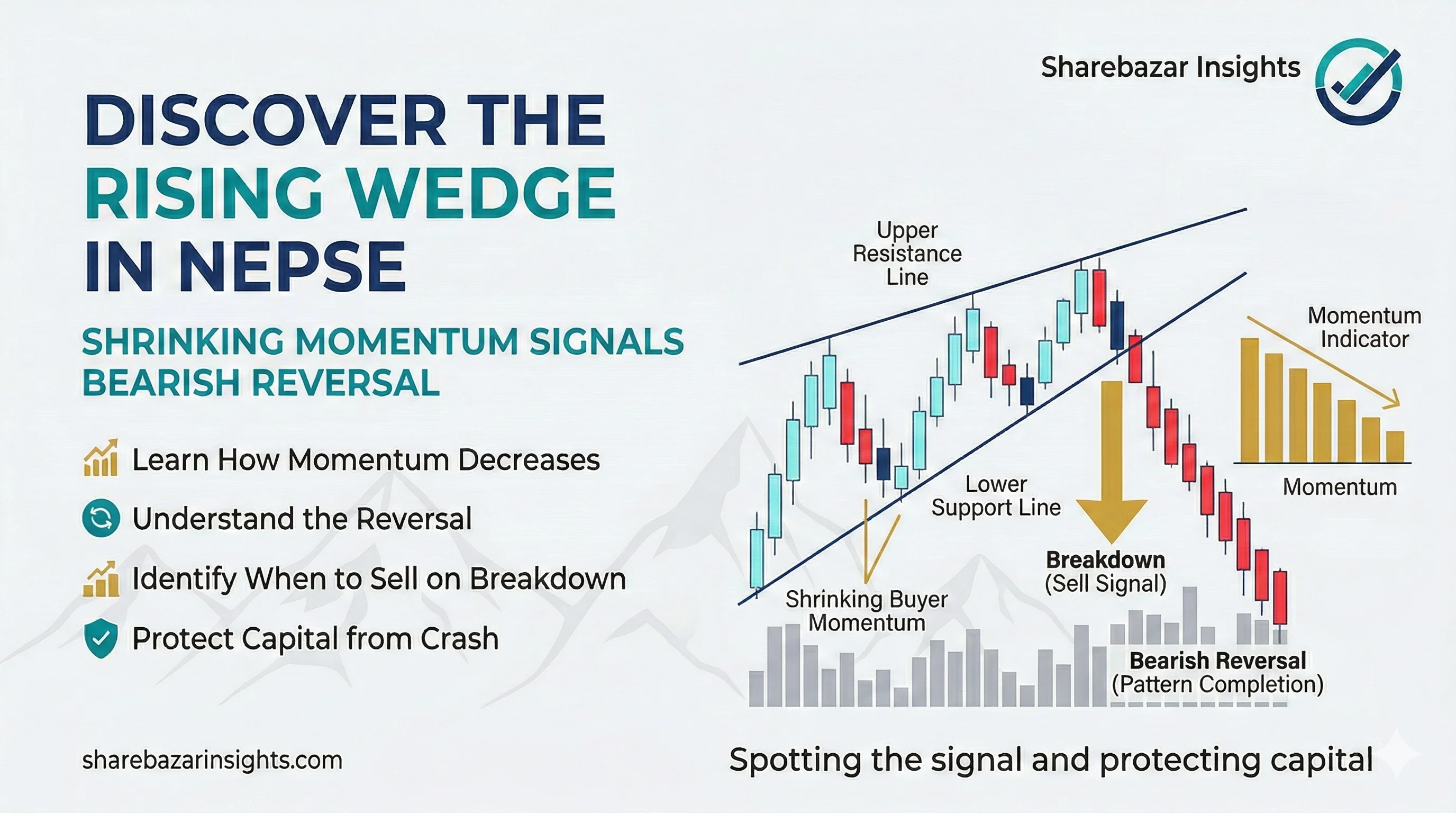
In the Nepal Stock Exchange (NEPSE), not all uptrends are built the same. Sometimes, a stock continues to make new highs, but the momentum feels incredibly weak. It is grinding upward, but every push takes massive effort for very little reward.
This scenario paints a Rising Wedge on the chart. While amateur laganikartas might see the higher prices and think the stock is still a strong "Buy," experienced traders recognize this pattern for what it really is: a ticking time bomb.
Anatomy of the Rising Wedge
Unlike a parallel channel where the price bounces evenly between support and resistance, a Rising Wedge is a story of compression.
📈 The Upward Grind: The stock is making higher highs and higher lows, meaning the trend is technically still upward.
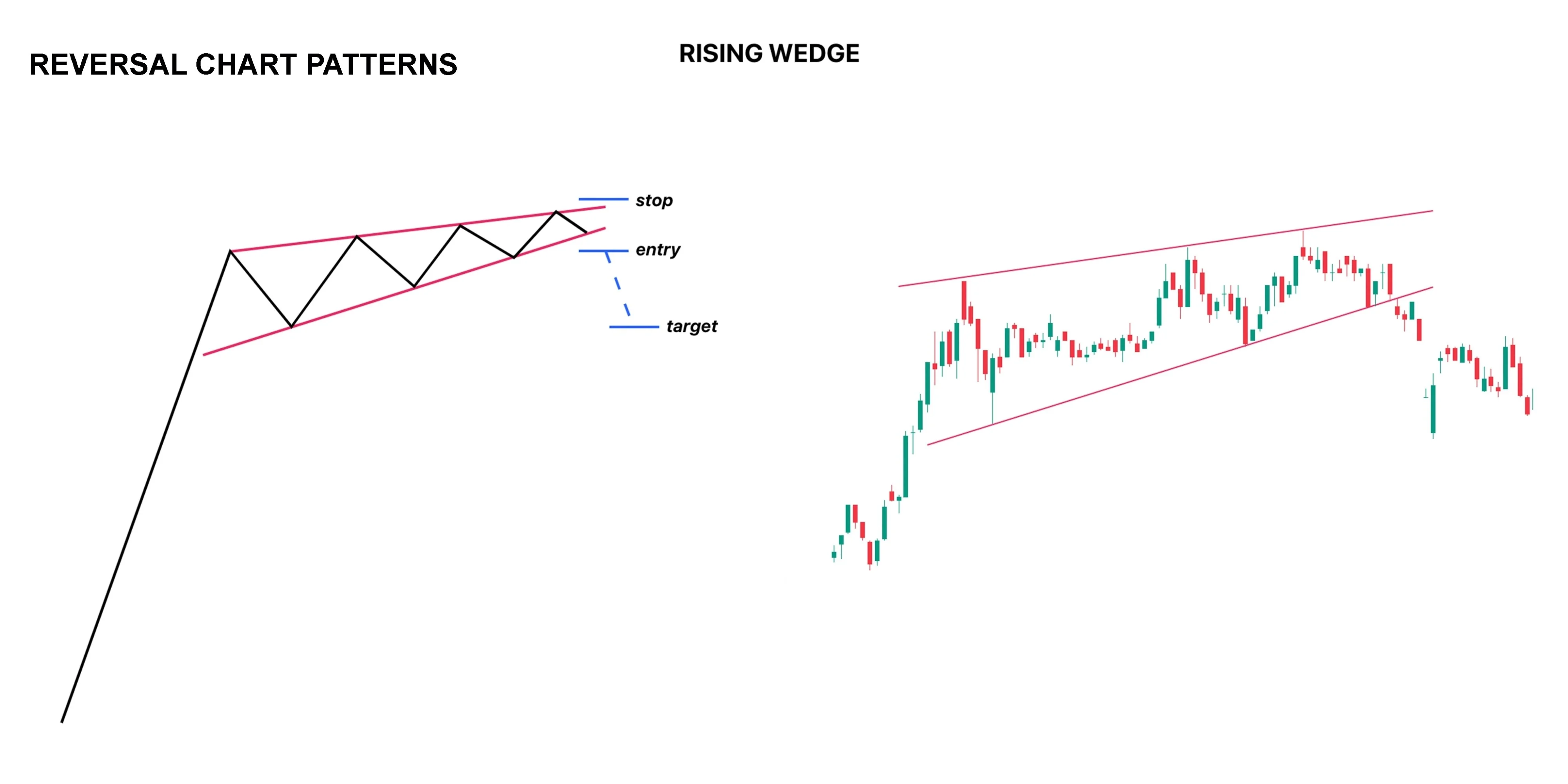
📐 The Squeeze: The lower support line is steeper than the upper resistance line. This means the lows are catching up to the highs, squeezing the price into a narrowing, upward-pointing cone.
🚨 The Breakdown: The buyers finally run out of cash, and the price violently breaks downward through the lower support trendline.
 The Psychology: Draining the Buyers' Power
The Rising Wedge is the ultimate visual of buyer exhaustion. Because the price is getting squeezed tighter and tighter, we know that the buyers are spending all their capital just to push the stock a few rupees higher. Their power is draining rapidly.
Meanwhile, the smart money and institutional sellers are watching this happen. They realize the buyers simply cannot push the price to a substantially higher level. So, what do the sellers do? They start dumping their shares. Because the buyers are already entirely depleted from the upward grind, they cannot absorb this new wave of selling. The floor collapses, leading to a swift bearish market for that scrip.
How to Trade It (Protect Your Capital) in NEPSE
Because the price is technically still rising inside the wedge, timing your exit is critical:
🚦 The Exit Signal: Do not sell just because the wedge is getting tight—sometimes they can break upward (though rare). Wait for a daily candlestick to decisively close below the lower rising support line. That is your confirmed exit signal.
📊 Volume Clues: During the formation of the wedge, you will often see trading turnover steadily decreasing. A volume spike on the day the stock breaks downward confirms the big sellers have arrived.
🎯 The Danger Zone: Rising Wedges usually retrace the entire length of the wedge. The stock is likely to fall all the way back down to the price where the pattern first started forming.