
The Bullish Kicker Pattern in NEPSE: Riding the Explosive Gap-Up
If you have spent enough time staring at your TMS dashboard, you have likely witnessed this scenario: A stock is having a terrible week, closing deeply in the red. But the very next morning, it opens with a massive gap-up and immediately locks into a positive circuit.
Anyone who sold the day before is left in pure shock, while the buyers ride a massive wave of profit.
In technical analysis, this violent, explosive shift in market sentiment is known as the Bullish Kicker Candlestick Pattern. It is arguably the most powerful two-candle reversal signal in existence, and in the NEPSE, it is almost always driven by major fundamental news. Here is how to understand and trade this aggressive setup.
What is a Bullish Kicker Pattern?
The Bullish Kicker is a two-candle reversal pattern that visually represents a violent "kick" to the market's current direction. It completely ignores the previous day's bearish momentum.
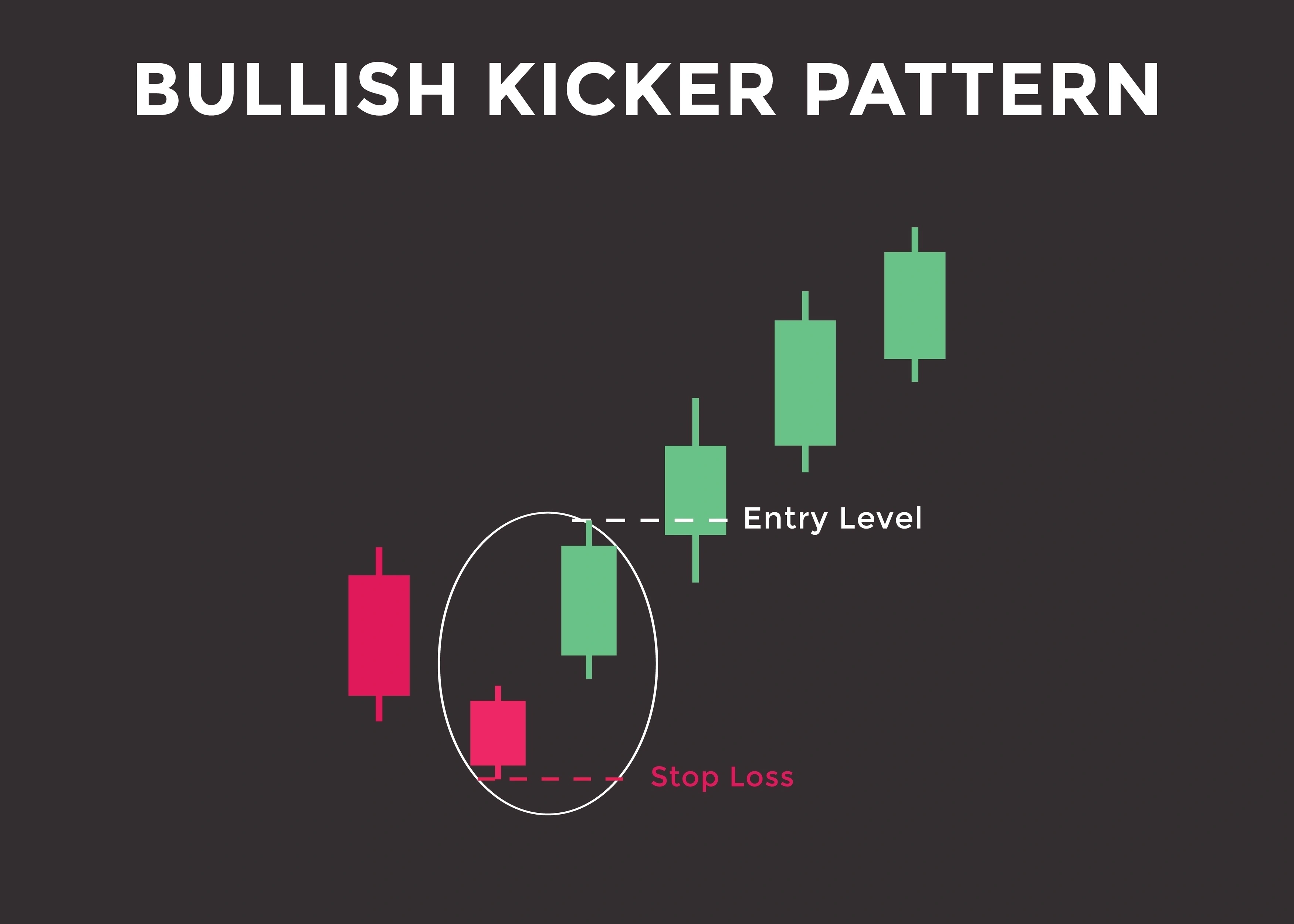 The Anatomy of a Perfect Bullish Kicker:
Candle 1 (Day 1): A strong, long-bodied red (bearish) candle. The bears are in complete control of the downtrend.
Candle 2 (Day 2): A strong, long-bodied green (bullish) candle.
The "Kick" (The Gap): The most crucial rule is that Day 2 must open with a massive gap up. It must open above the previous day's opening price, leaving a visible empty space (a gap) between the two candlesticks on the chart. There should be absolutely no overlap between the two bodies or their wicks.
The Psychology: Trapping the Bears
A Bullish Kicker rarely happens by accident. In the Nepali market, it is usually triggered by after-hours news:
A company publishes an outstanding Q3 financial report.
A massive bonus dividend is proposed by the Board of Directors.
The regulatory bodies (like NRB or SEBON) announce policies highly favorable to the market.
The Pre-Market Shock (10:30 AM - 10:45 AM): On Day 1, everyone was pessimistic. But when the news drops after the market closes, sentiment completely flips. During the pre-open session the next morning, buyers aggressively place buy orders at the maximum allowed upper limit.
When the market officially opens at 11:00 AM, the stock gaps up massively. Every single retail investor who panic-sold the day before realizes they made a huge mistake. The sudden surge of buying pressure, combined with the total absence of willing sellers, creates a massive green candle. The bears have not just lost the battle; they have been completely wiped out.
How to Trade the Bullish Kicker in NEPSE
Because this pattern is so aggressive, trading it requires quick reflexes and a solid understanding of market depth.
Step 1: Verify the News and Volume Never trade a gap-up blindly. First, check local financial portals to see why the stock is gapping up. Is the news genuine, or is it just a market rumor? Second, ensure that the volume on the green kicker candle is exceptionally high. A gap-up on low volume is often a "fakeout" designed to trap eager retail buyers.
Step 2: Execution Strategies
The Aggressive Entry: If the news is highly credible (e.g., an official dividend declaration), you can enter the trade immediately at the market open on Day 2. However, getting your order executed might be difficult if the stock hits an instant upper circuit.
The Pullback Entry: Often, a stock will gap up, run hard, and then experience a minor intraday pullback as some traders book quick profits. Buying on this slight dip later in the day offers a safer entry point.
Step 3: Risk Management Even with powerful news, the NEPSE can be unpredictable.
Stop-Loss: Place your stop-loss just below the bottom of the gap (the top of Day 1's red candle). If the market sentiment fades and the price falls back down to "fill the gap," the bullish momentum has failed, and you should exit the trade.